Vincitori del 1982
Queste sono le schede dei giovani matematici premiati con il prestigioso premio, nell'anno 1982.
Da questo anno in poi alcuni matematici verranno premiati con il Premio Nevanlinna, come nel caso di Robert Tarjan, il primo premiato.

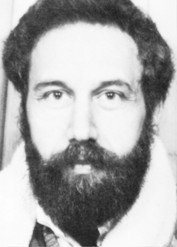 |
Nome:
|
Alain CONNES
|
|
Nato il:
|
1 Aprile 1947
|
|
|
A:
|
Darguignan (Francia)
|
|
|
Università:
|
Institut des Hautes études Scientifiques
|
|
|
Contributed to the theory of operator algebras, particularly the general classification and structure theorem of factors of type III, classification of automorphisms of the hyperfinite factor, classification of injective factors, and applications of the theory of C*-algebras to foliations and differential geometry in general.
|
||
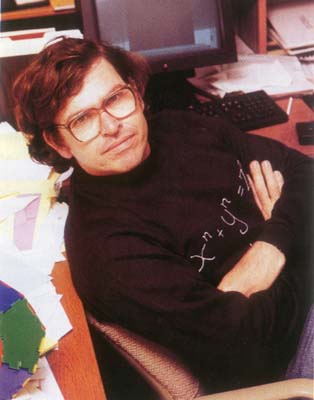 |
Nome:
|
William P. THURSTON
|
|
Nato il:
|
30 Ottobre 1946
|
|
|
A:
|
Washington D.C.
|
|
|
Università:
|
Princeton University
|
|
| Revolutionized study of topology in 2 and 3 dimensions, showing interplay between analysis, topology, and geometry. Contributed idea that a very large class of closed 3-manifolds carry a hyperbolic structure. | ||
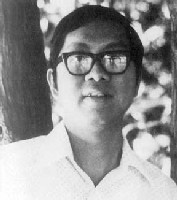 |
Nome:
|
Shing-Tung YAU
|
|
Nato il:
|
4 Aprile 1949
|
|
|
A:
|
Kwuntung (Cina)
|
|
|
Università:
|
Institute for Advanced Study
|
|
|
Made contributions in differential equations, also to the Calabi conjecture in algebraic geometry, to the positive mass conjecture of general relativity theory, and to real and complex Monge-Ampére equations.
|
||
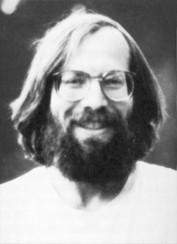 |
Nome:
|
Robert Endre Tarjan
|
|
Nato il:
|
30 Aprile 1948
|
|
|
A:
|
California (USA)
|
|
|
Università:
|
University of New York
|
|
| Received the first Nevanlinna Prize for outstanding contributions to mathematical aspects of information science. "Pure mathematics enjoys the luxury of studying its constructions, whether finite or infinite, in complete independence of all questions of efficiency" explained Jacob Schwartz, who spoke on Tarjan's work. "By contrast, theoretical computer science must ultimately concern itself with computing engines which operate with limited speed and data storage, and therefore must take efficiency as one of its central concerns. Two closely related activities, algorithm design and algorithm analysis, grow out of this inevitable concern." The awards were announced in 1982 even though the Warsaw Congress was not held until 1983. | ||
 Elenco vincitori